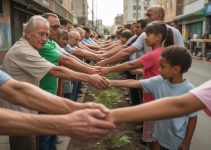
When crisis hits, you’ll find Bahá’í solidarity asks you to recognize our shared humanity and act together with purpose and care. It calls on you to practice consultation, justice, and service so communities can respond practically and compassionately. You’ll see how collective effort turns urgency into lasting support—and why those principles matter for recovery and resilience—so keep going to explore concrete steps and real examples that make this hope tangible.
Main Points
- Bahá’í solidarity frames crises as collective responsibilities, turning suffering into shared action and mutual care.
- Rooted in the oneness of humanity, solidarity encourages crossing divisions to protect vulnerable people.
- Prayer, consultation, and coordinated service guide responses, pairing spiritual reflection with practical relief.
- Justice-focused solidarity addresses root causes and preserves individual dignity, fostering lasting resilience.
- Local communities mobilize quickly, combining material aid, psychosocial support, and relationship-building to sustain hope.
What Solidarity Means in the Bahá’í View
Solidarity, for Bahá’ís, isn’t just sympathy—it’s a committed, practical bond that calls you to act for the welfare of all. You see unity as foundational: every person shares spiritual dignity and responsibility, so you treat others with justice and respect. Solidarity means cooperating across differences, pooling skills and resources to meet common needs. You prioritize local communities while recognizing global interdependence, so your choices reflect both neighborly care and wider consequence. Prayer and consultation guide your actions, keeping efforts humble and rooted in service rather than charity alone. When institutions and individuals work together, you build resilience and mutual support. This ethic shapes daily behavior, motivating sustained, organized responses to suffering without seeking credit.
How the Oneness of Humanity Turns Crisis Into Hope
Hope springs from recognizing our shared humanity: when you see others as equals in dignity and destiny, crises stop being impersonal disasters and become calls to collective action. You respond differently when you feel kinship; fear shifts to responsibility and isolation gives way to mutual support. The Bahá’í emphasis on oneness prompts you to cross divisions—national, ethnic, economic—to protect the vulnerable and rebuild together. That perspective lets you reinterpret loss as opportunity: to strengthen bonds, redistribute resources, and create institutions that prevent recurrence. By centering common identity, you prioritize long-term welfare over short-term advantage, fostering resilience. In practice, this mindset transforms despair into purposeful cooperation, turning moments of upheaval into engines of renewal and shared hope.
Core Bahá’í Principles That Shape Solidarity (Consultation, Justice, Service)
Seeing our shared humanity makes action possible, but you need guiding principles to shape that action into lasting solidarity. You practice consultation to listen, weigh views, and decide collectively; you pursue justice to correct imbalance and protect dignity; you offer service to translate care into sustained help. Together they stop charity from being fleeting and turn response into transformation.
| Principle | What you do | Effect |
|---|---|---|
| Consultation | Share perspectives equally | Inclusive decisions |
| Justice | Address root causes | Fair opportunities |
| Service | Meet needs consistently | Restored dignity |
| Integration | Combine all three | Sustainable solidarity |
Apply them deliberately: consult before acting, guarantee fairness, and commit to ongoing service so hope endures beyond crisis.
How Bahá’í Communities Organize Practical Solidarity in Emergencies
When a disaster strikes, Bahá’í communities quickly mobilize local institutions—members of spiritual assemblies, children’s classes, and devotional groups—so you get coordinated relief that reflects local needs and capacities. You’ll see them assess needs quickly, prioritizing food, shelter, medical care, and psychosocial support while consulting to avoid duplication. Volunteers with relevant skills are organized into teams for distribution, home visits, and logistics, and resources are pooled from households and nearby communities. Communication channels—phone trees, social media, community noticeboards—keep you informed about services and safety. Efforts link with non-Bahá’í local authorities and NGOs so assistance complements wider response. Throughout, training in disaster preparedness and community resilience helps you maintain continuity and adapt as needs evolve.
Real-World Examples of Bahá’í Solidarity Restoring Communities
The practical steps Bahá’í communities take in emergencies show up in concrete ways on the ground: schools rebuilt after storms, mental-health support set up after conflict, and livelihoods restored through coordinated microgrants and training. You’ll see volunteers mobilize to clear debris, repair classrooms, and reopen learning quickly so children return to routine. You’ll observe counselors running group sessions that reduce trauma’s isolation, and local nurses providing basic care while linking people to services. You’ll notice cooperative seed and tool programs helping farmers plant next season, and apprenticeships reviving small trades. These examples show solidarity as practical, adaptive, and community-led: you witness neighbors taking shared responsibility, using local knowledge, and blending material aid with relationship-building to restore dignity and resilience.
Steps Any Community Can Take to Apply Bahá’í Solidarity Today
Any community can start by mapping immediate needs and local strengths, then coordinating simple, visible actions—like clearing debris, reopening a classroom, or organizing group counseling—that combine material help with relationship-building. You can begin by convening diverse neighbors and local groups, listening without judgment, and agreeing on small, achievable tasks that build trust. Use clear roles, rotate responsibilities, and celebrate small wins to keep morale high.
- Picture a row of volunteers sweeping a street, sharing water and stories.
- Picture a repaired classroom with children returning and elders watching.
- Picture a circle of neighbors offering steady support after a hard loss.
These steps help you translate compassion into durable, community-led solidarity.
Measuring and Sustaining Hope-Driven Solidarity After the Crisis
Although measuring solidarity can feel intangible, you can track concrete signs of hope—participation rates in community activities, recurrence of neighbor-led support, and stories that show shifting attitudes toward mutual responsibility. You should set simple metrics: attendance, volunteer hours, distribution of resources, and frequency of collaborative problem-solving meetings. Use surveys and listening sessions to capture qualitative shifts in trust and willingness to sacrifice for others. Maintain momentum by institutionalizing practices—regular neighbor circles, shared learning projects, and rotation of responsibilities so leadership stays broad. Celebrate small wins publicly to reinforce norms and model service as worship. Review data periodically, adjust approaches, and invest in capacity-building so the hope that drove solidarity becomes a durable communal habit rather than a temporary response.
Frequently Asked Questions
How Does Bahá’í Solidarity Relate to Interfaith Collaboration During Crises?
You’ll find Bahá’í solidarity encourages shared service, mutual respect, and coordinated action with other faiths during crises, so you’ll collaborate on relief, amplify common values, and build lasting interfaith networks for sustained recovery and unity.
Are There Bahá’í Teachings Specifically on Mental Health Support in Emergencies?
Yes, you’ll find Bahá’í teachings encouraging compassionate care, consultation, and community support for the distressed in emergencies; they don’t codify clinical protocols but urge practical, loving assistance, spiritual consolation, and coordinated service.
How Do Bahá’í Communities Fund Long-Term Rebuilding Projects?
Like a garden tended seasonally, you fund long-term rebuilding through community contributions, fundraising, grants, and institutional support; you’ll organize local campaigns, seek partnerships with NGOs, apply for external aid, and allocate savings responsibly for sustainable recovery.
Can Non-Bahá’ís Lead Bahá’í-Organized Relief Initiatives?
Yes, you can lead Bahá’í-organized relief initiatives if the community invites you; they’ll expect you to respect their principles, collaborate with local members, follow guidance, and prioritize service, unity, transparency, and consent throughout the work.
What Role Do Youth Play in International Bahá’í Solidarity Networks?
Like bright young lanterns, you energize international Bahá’í solidarity networks by organizing, mobilizing peers, facilitating communication, offering skills, nurturing unity, leading service projects, and bridging cultures—so your creativity and commitment keep solidarity alive and growing.
See the Next Article
You’ve seen how Bahá’í solidarity turns crisis into hope by reminding you of your shared humanity and calling you to act—think of it like a telegram urging unity. You’ll practice consultation, justice, and service, organize practical care, and learn from real examples to restore community life. Keep measuring impact, sustaining bonds, and nurturing resilience so hope endures beyond the emergency—and you’ll help build a fairer, more connected future for everyone.